

Co-hosted by Shu-mei Shih, Quentin Tan, and Alan Dai, the 2026 UCLA-NTNU Taiwan Studies Conference, “Tongues of Taiwan: Culture and Identity between Language and Empires,” was held from May 29 to 30, bringing together scholars from Taiwan and the United States to examine the multilingual and inter-imperial conditions that have shaped Taiwan’s cultural history and continue to inform its contemporary identities. Taking “tongues” as both a linguistic and cultural metaphor, the conference explored Taiwan not as a space governed by a single language, ethnicity, or polities, but as a complex site where multiple languages, scripts, sounds, memories, and cultural forms have overlapped and competed with, been translated into, and sometimes obscured one another. Across two days, the conference created a rich intellectual forum for considering how Taiwan’s past and present are articulated through Mandarin, Taiwanese, Japanese, Dutch, Indigenous languages, classical Chinese, and other linguistic formations.
The opening of the conference was attended by esteemed representatives from UCLA, including Cindy Fan, Vice Provost for International Studies and Global Engagement; Alexandra Stern, Dean of the Division of Humanities; and Min Zhou, Director of the Asia Pacific Center. Their presence underscored the importance of the UCLA-NTNU Taiwan Studies Initiative as a platform for international scholarly exchange and for advancing Taiwan Studies as a field that is at once historically grounded, theoretically ambitious, and globally connected. Their opening remarks framed the annual conference, now in its ninth iteration, as the continuation of a broader institutional commitment to deepening transpacific collaboration and knowledge production.
The first panel, “Languages and Empires of Taiwan,” immediately established the thematic force of the conference and effectively broke the ice for the discussions that followed. Featuring two NTNU faculty members, Yoshihisa Amae and Ann Heylen, the panel addressed the layered relationship between language use and imperial power in Taiwan’s history. Professor Amae examined how Japanophone Indigenous writers responded to the White Terror and articulated forms of subjectivity even while writing in the language of a colonizing empire. Professor Heylen’s presentation examined Dutch historical documents and discussed how colonial language could appear to eclipse Indigenous practices, even as those practices continued to leave traces within, around, and against the colonial archive. Taken together, the panel gave a powerful response to the conference theme by showing that Taiwan’s linguistic history cannot be reduced to a simple succession of dominant languages; rather, each imperial formation produced uneven relations between inscription and translation, as well as erasures and survivals.
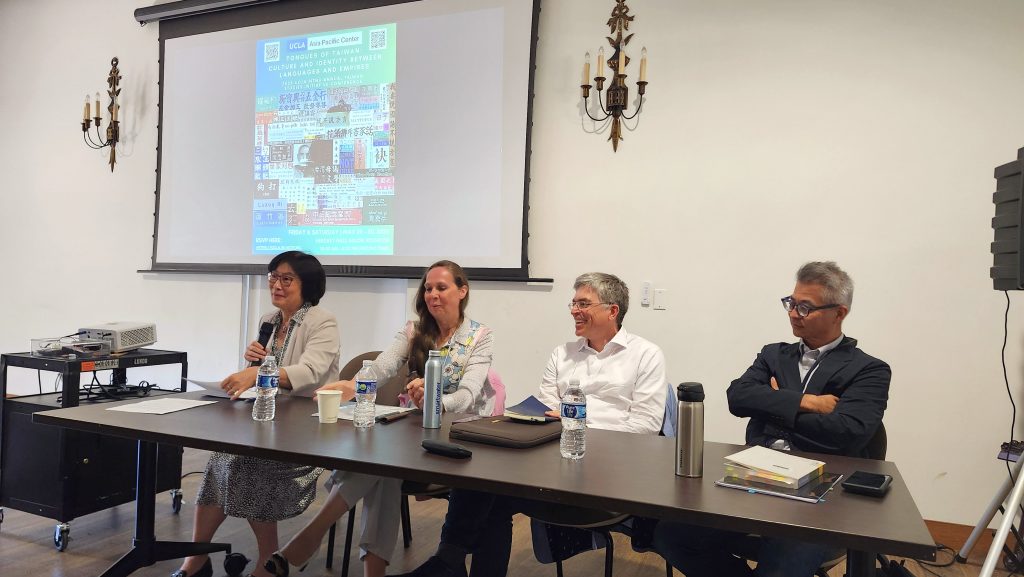
The following panels expanded this conversation across disciplines and time periods. Many scholars from US universities, including Satoru Hashimoto from Johns Hopkins University, Andrea Bachner from Cornell University, and Brian Bernards from the University of Southern California participated in the conference. Their contributions, together with those of other presenters, addressed a wide range of topics, including literature and translation, media and audiovisuality, linguistics, and identity. Rather than treating language as an isolated object, the presentations collectively showed how language operates across literary form, historical documentation, audiovisual media, social identity, institutional power, and everyday cultural practice. Questions of translation, voice, mediation, and legibility surfaced repeatedly throughout the conference, suggesting that Taiwan’s history is not simply a matter of coexistence among different peoples, but a historically charged field of negotiation shaped by imperial histories and multilingual practices. Professor Pei-feng Chen from Academia Sinica also contributed a special presentation via pre-recorded video on the predicament of the Taiwanese language movement, bringing the conference’s historical and theoretical discussions into direct conversation with contemporary debates over linguistic revival and cultural identities in Taiwan.
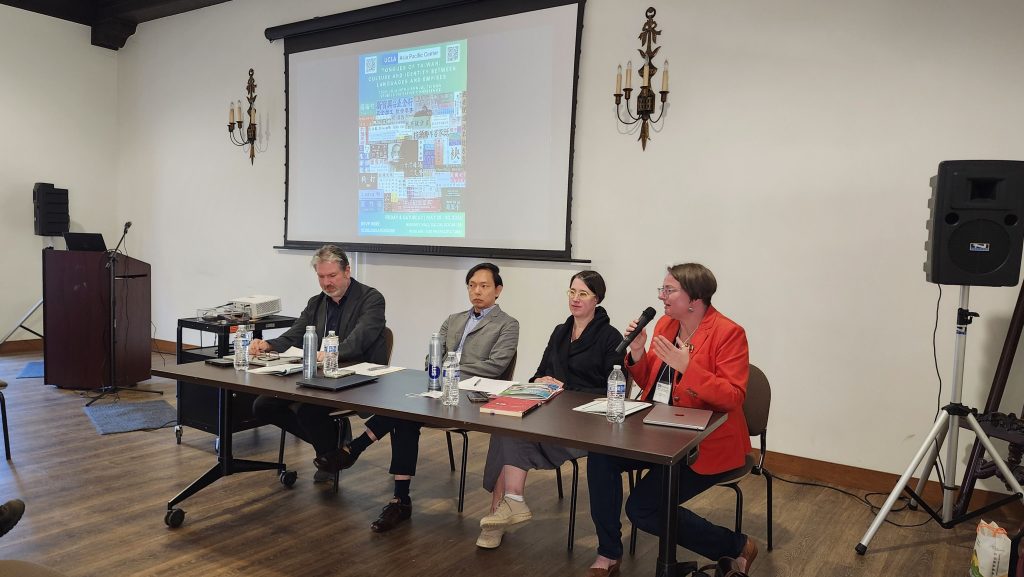
The conference concluded with a forum led by Professor Shu-mei Shih, the long-time host of the conference and honorary chair of Taiwan Languages, Literature and Culture at NTNU. In her concluding remarks, Professor Shih summarized how the presentations had illuminated the various relationships through which languages in Taiwan relate to one another. These relationships included multilingualism, translation, ventriloquism, mediation, hierarchy, displacement, and partial unintelligibility. At the same time, she emphasized that there is no single theory capable of fully capturing Taiwan’s multilingual reality. This point became a productive difficulty rather than a limitation. The forum participants echoed the challenge of theorizing Taiwan’s linguistic complexity, while also offering optimistic and generative reflections on how scholars might continue to approach it. Andrea Bachner observed that many of the papers responded to this difficulty not by forcing a totalizing theoretical model onto Taiwan’s multilingual condition, but by delving carefully into textual, archival, and formal details. Frederik Green offered a critique of empires and their seeming openness to multilingualism, suggesting that such openness might function less as a paradox than as a strategy of imperial management. NTNU faculty member Hsi-Yao Su also reminded participants that multilingualism always entails the presence of untranslated or unknown knowledge.
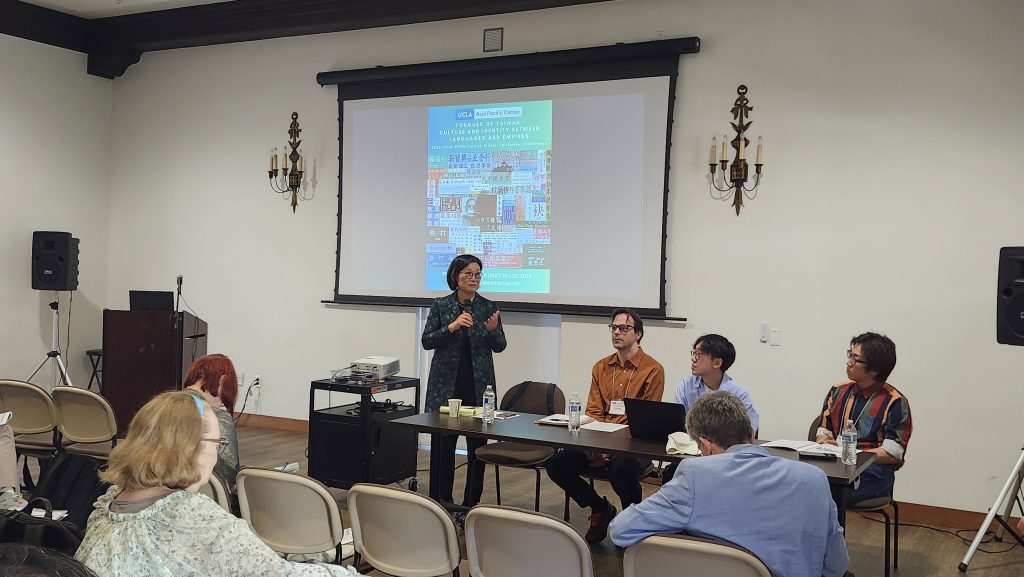
“Tongues of Taiwan” convened scholars from Taiwan and the United States to examine the multilingual and inter-imperial realities of Taiwan’s past and present across fields as wide as literature, film and media studies, linguistics, history, sociology, and anthropology. The conference deepened scholarly understanding of the complexities of linguistic and cultural practices under imperial rule throughout history, while also demonstrating the continued relevance of these questions to contemporary Taiwan. By bringing together diverse archives, methodologies, and theoretical perspectives, the conference demonstrated that Taiwan Studies remains a crucial field for rethinking the relationships between language, empire, identity, and cultural memory. Its central contribution was not to resolve Taiwan’s multilingual condition into a single framework, but to make that condition more visible in all its historical density, political difficulty, and intellectual possibility.
Guest reporting by Raymond Kun-Xian Shen (沈昆賢)