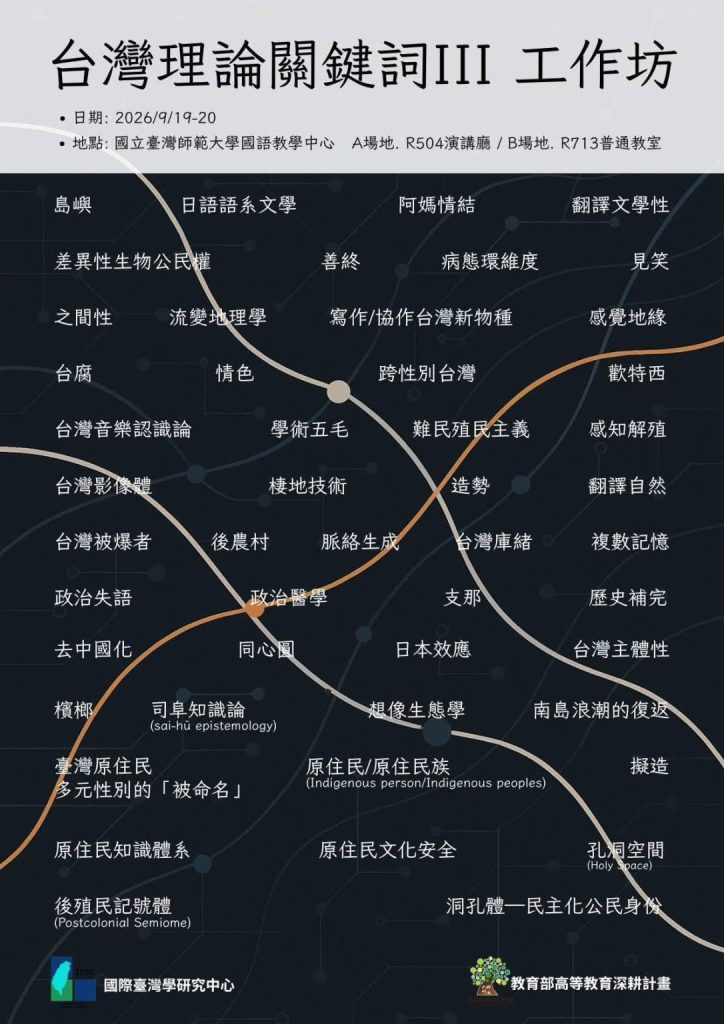

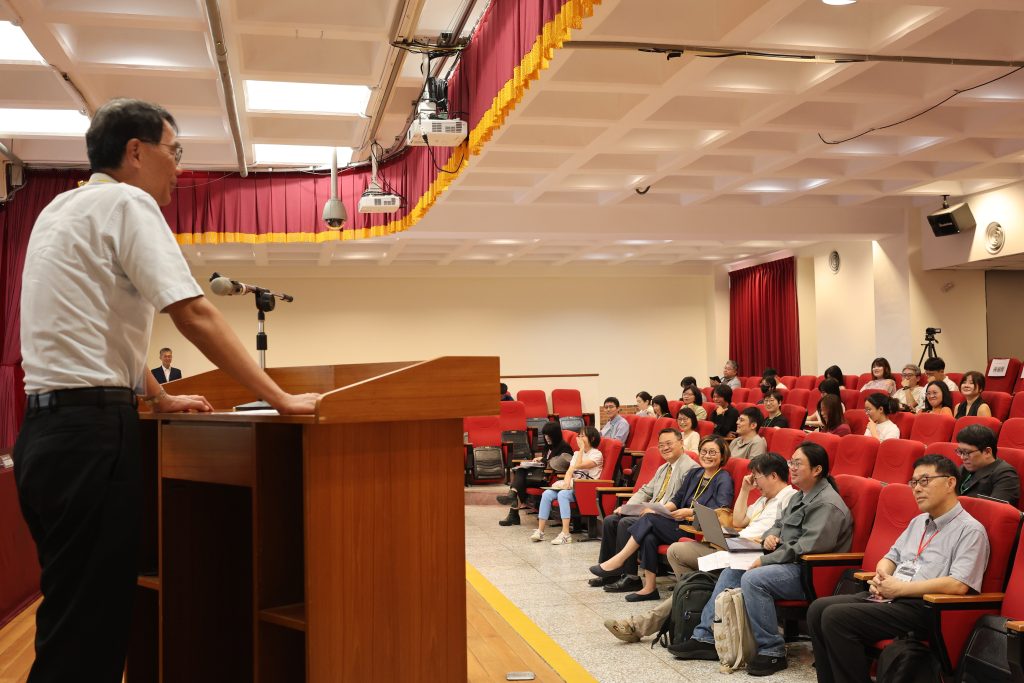
On September 19-20, 2026, the International Taiwan Studies Center at NTNU was pleased to host Keywords of Taiwan Theory III Workshop (台灣理論關鍵詞III工作坊).
Across two days and twelve panels, participants introduced forty-nine potential keywords of Taiwan theory, each representing important concepts in Taiwan history, culture, or theory, and experimenting with new ways of conceptualizing the Taiwan experience, creating theoretical tools which can be used to address global issues.
The workshop followed in the footsteps of two prior events and published volumes, Keywords of Taiwan Theory《臺灣理論關鍵詞》(2019) and Keywords of Taiwan Theory II《臺灣理論關鍵詞II》(2025), which introduced fifty-five keywords between them.
The context and purpose of the workshop and the keyword approach was clearly explained during the opening ceremony by Yushan Scholar, Irving and Jean Stone Chair Professor at UCLA, and Chair Professor of the NTNU Department of Taiwan Literature, Languages and Culture Shih Shu-mei (史書美).
In her remarks, she explained how the building of Taiwan’s subjectivity necessitates the building of Taiwan theory—that is, theory which reflects a uniquely Taiwanese way of seeing and experiencing the world, in contrast with dominant, received theories, usually Western in origin and treated as universal.
If all applicable theories emerge from specific situations, including language, then any Taiwan-based theory must arise from Taiwan’s particular language(s) and circumstances—hence the use of keywords to assemble important concepts in Taiwan’s history, culture, and worldview.
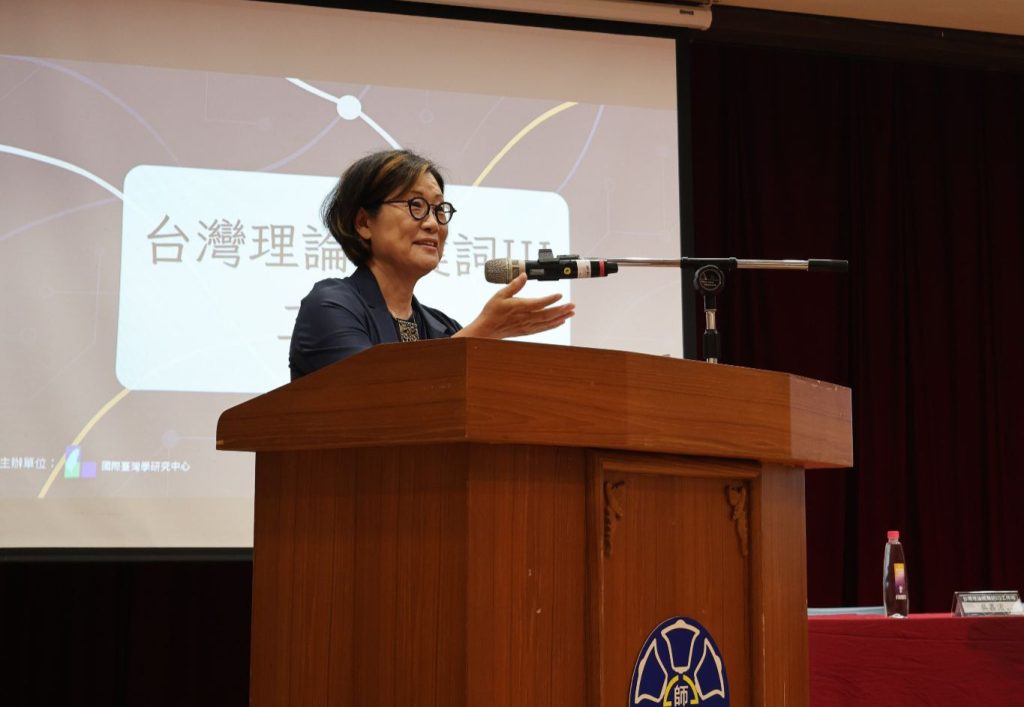
Professor Shih emphasized the cycle of theoretical creation: Theories begin with a firm grounding in local historical circumstances in order to conceptualize life experience, and go on to escape the specifics of that grounding to be applicable in other situations. But instead of being merely representative of historical or social facts, they reflect the ways theorists see themselves and their own history, feeding back into interpretations of local circumstances. With good progress already made in the first two steps by prior activities and publications, Professor Shih hoped that this workshop would mark the beginning of Taiwan theory building upon and reinforcing its own past work, deepening understanding of itself and Taiwan.
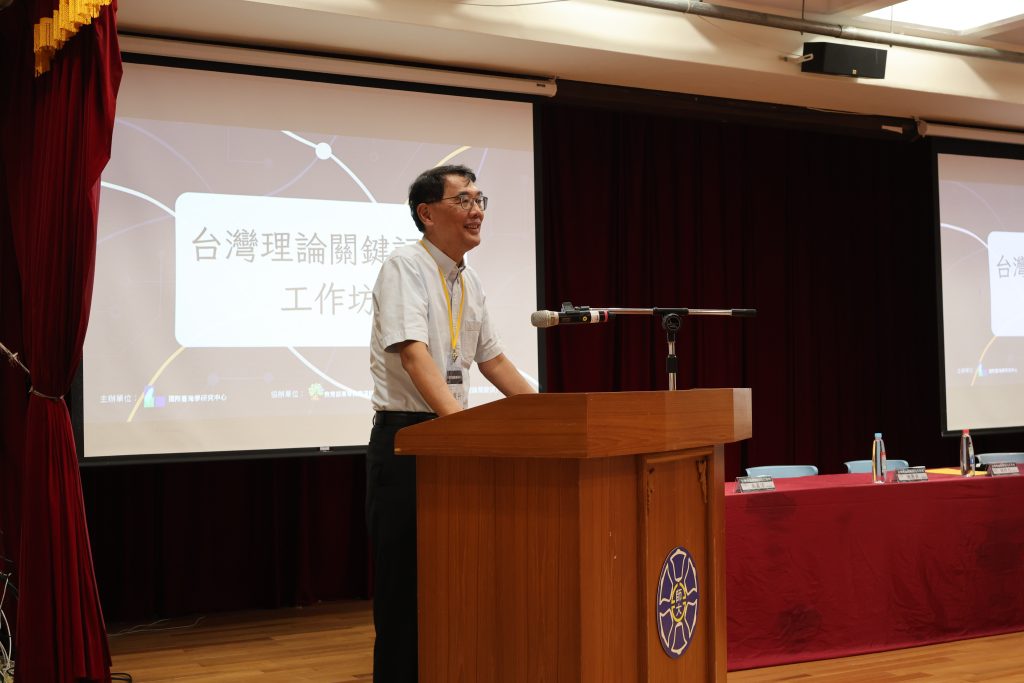
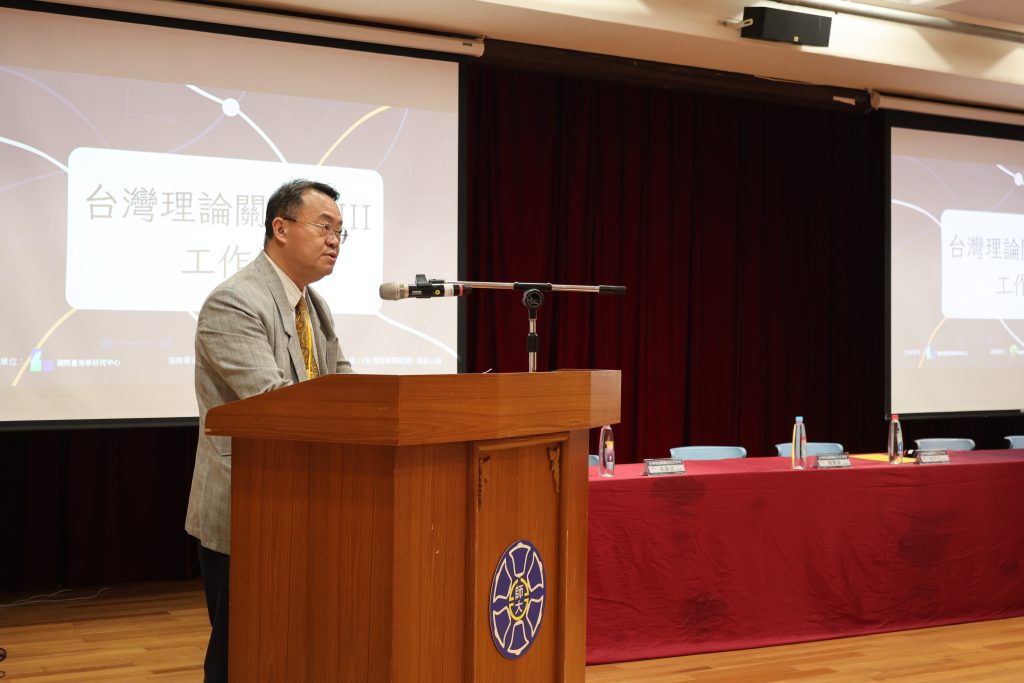
Distinguished Professor Chen Dung-sheng (陳東升) from the NTU Department of Sociology also spoke, noting that with Taiwan being “seen” by the world as it has not been for almost four hundred years, and the number of Taiwan-related faculty positions at North American humanities departments rapidly growing, now is the opportune moment promote Taiwan theory to students and researchers around the world.
Distinguished Professor and Dean of NTNU’s College of Liberal Arts Liaw Shyue-Cherng (廖學誠) reaffirmed how the development of these keywords would allow Taiwan and the world to be seen and understood from Taiwan’s own base principles, thus building its own internal complexity and reinforcing its epistemological sovereignty.
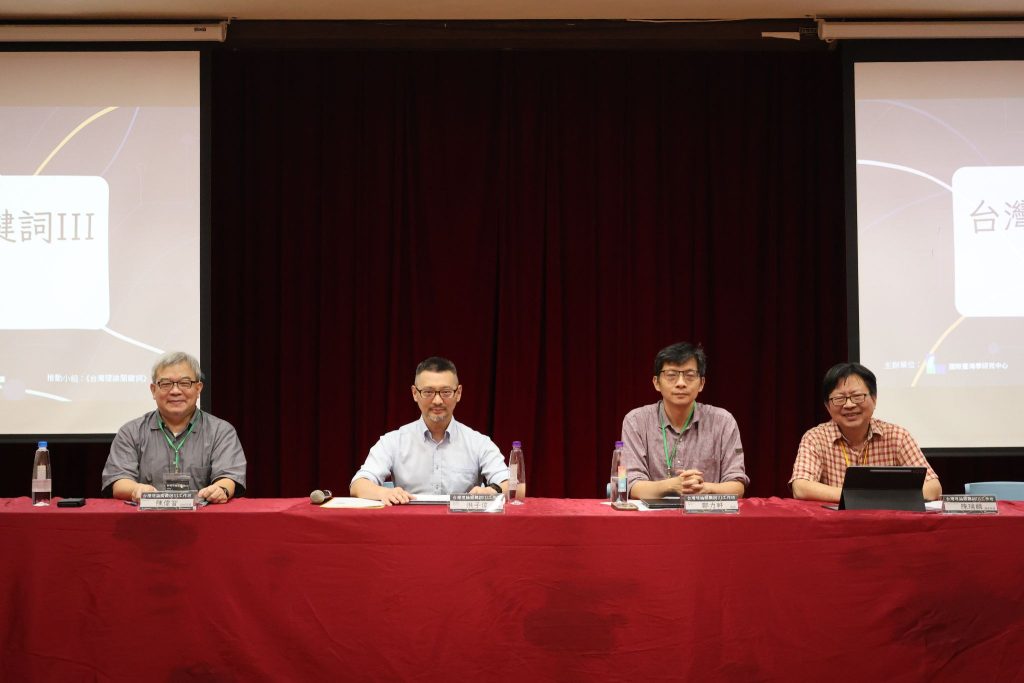
Chaired by esteemed scholars such as Professor Shih, Distinguished Professors Kuo Wen-hua (郭文華) and Chen Ruey-lin (陳瑞麟), Professor and ITSC Director Nikky Lin (林巾力), Research Fellows Hung Tzu-wei (洪子偉) and Chang Lung-chih (張隆志), and Professor Anthony Yeh (葉浩), the panels discussed keywords encompassing a diverse range of historical and cultural concepts and phenomena: from from Taiwanese hibakusha (台灣被爆者) and refugee colonialism (難民殖民主義) to island (島嶼) and habitat technics (棲地技術), from Taiwan zhutixing (台灣主體性) and sai-hū epistemology (司阜知識論) to enviralmental (病態環維度) and fabulation (擬造).
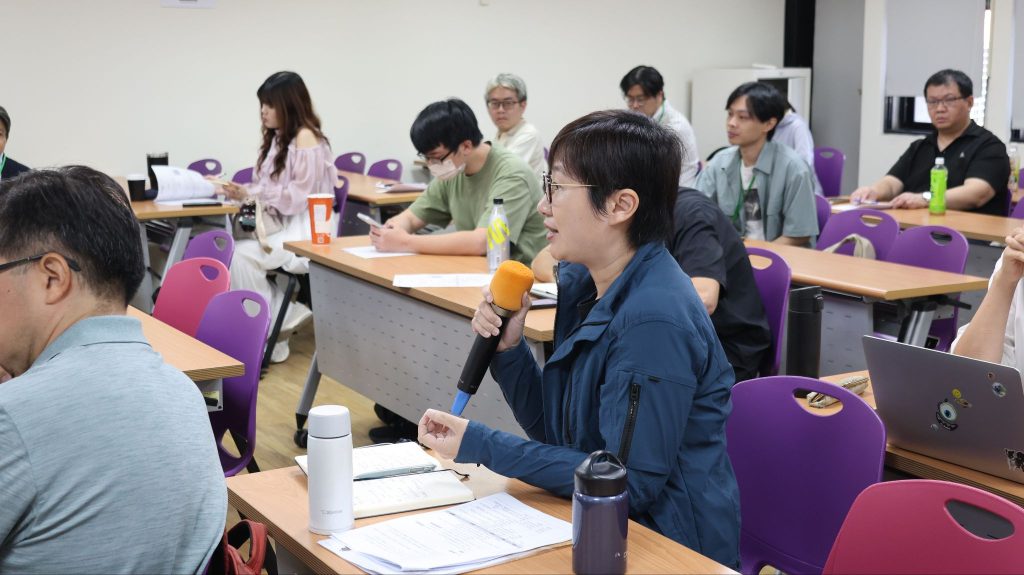
In line with Professor Shih’s goals, some keywords, like Taiwan fu (台腐) and concentric circles (同心圓) were extensions or reexaminations of those developed at previous workshops. Newcomers and veteran scholars alike showed themselves to be on the cutting edge of research and theoretical creation, exploring new ways of understanding the world through the lens of Taiwan.
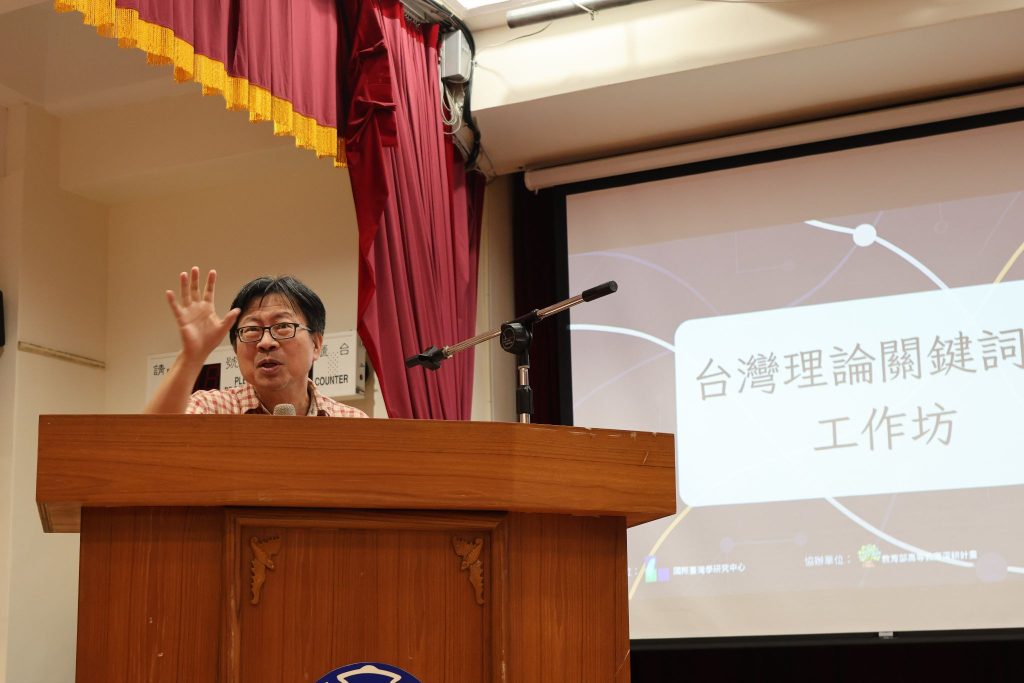
The closing ceremony was led by Distinguished Professor Chen Ruey-lin, who is also chairman of Keywords of Taiwan Theory Promotional Committee. In his remarks, he highlighted the excellent progress already made since the publication of the first Keywords volume in 2019, with many proposals and papers already taking the theoretical tools of these workshops out of the abstract and into concrete case studies. Professor Chen encouraged participants to further refine their research by publishing it in academic journals, and also to be willing to put these theoretical tools to use in other fields and languages. This will help raise their visibility, and eventually make them mainstream.
Following the feedback and discussion from this workshop, the keywords and their papers will now undergo revision by presenters, and then another round of review by the Keywords of Taiwan Theory Review Committee. The best of the candidates will then be selected for inclusion in Keywords of Taiwan Theory III《台灣理論關鍵詞III》, which is expected to be published in late 2027 or early 2028. We look forward to reading the refined explorations of these keywords and using them in future research.
Read the full schedule and roster of presentations here.
Reporting by Gregory Laslo (樓克己)